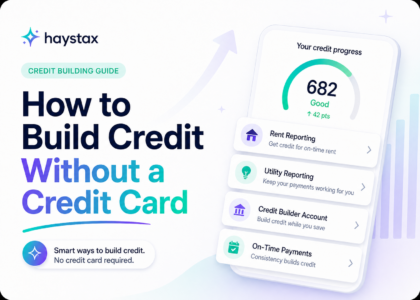



Start with simple tools designed to help you build positive credit history, compare costs, and understand what each option is best for.
Building credit can feel confusing when you are new to it.
You hear people talk about credit scores, credit reports, utilization, hard pulls, secured cards, tradelines, payment history, and all these other terms that sound more complicated than they need to be.
But if you strip it back, building credit is really about one thing:
Creating positive financial activity that gets reported.
That is where credit-building apps can help. The right tool can give you a simple way to start building payment history, track your progress, and understand what is actually moving your credit forward.
The key is choosing the right app for where you are now.
Because not every credit-building app does the same thing. Some help you build payment history. Some help with credit monitoring. Some report rent or bills. Some offer secured cards. Some are better for beginners, while others make more sense once you already have a little credit history.
Here is what to look for.
1. Look for tools that report to credit bureaus
This is the big one.
If a tool does not report your activity to the credit bureaus, it may still be useful for budgeting or education, but it probably will not do much to help build your credit profile directly.
The three major credit bureaus are Equifax, Experian, and TransUnion. Ideally, a credit-building tool reports to all three, but some tools report to only one or two.
That does not automatically make them bad. It just means you should understand what you are getting before you sign up.
What to check
- Which bureaus does the tool report to?
- How often does it report?
- What activity gets reported?
- Can late payments be reported too?
That last question matters. A credit-building tool can help when you use it well, but missed payments can work against you.
2. Check the monthly cost
Some credit-building apps are very affordable. Others can get expensive quickly, especially once you add premium features, monitoring, or extra products.
Before you sign up, look at the real monthly cost.
Not just the headline price. The real cost.
Ask yourself:
- Is there a monthly fee?
- Is there a setup fee?
- Is there a deposit?
- Is there interest?
- Can I cancel easily?
A tool that costs $5 per month may be easy to test. A tool that requires a larger deposit or long-term commitment might still be useful, but you should know exactly what you are agreeing to.
3. Choose a tool that matches your situation
This is where people often get stuck.
They ask, “What is the best credit-building app?”
The better question is:
Best for what?
If you are brand new to credit, you may want a beginner-friendly tool with low cost and simple reporting.
If you are rebuilding after missed payments or collections, you may want something that helps you create fresh positive activity.
If you already pay rent or bills on time, a reporting tool may help you make those payments count.
If you want to eventually qualify for better cards, loans, apartments, or financing, you may need a mix of tools over time.
The right tool is the one that fits your current stage.
4. Look for simple progress tracking
One of the most motivating parts of credit-building is seeing movement.
Even small progress can make you feel like you are finally getting somewhere.
A good beginner-friendly app should help you understand:
- where your score is now
- what changed recently
- which habits are helping
- what to do next
You do not need a complicated dashboard full of finance jargon.
You need clarity.
Simple progress tracking can help you stay consistent, and consistency is what builds credit over time.
5. Be careful with big promises
This is important.
Any app that promises instant credit repair or guaranteed score increases should make you pause.
Credit-building takes time. Results can vary depending on your starting point, your credit profile, your payment history, and what else is happening on your report.
A good tool can help create momentum. It cannot magically erase every problem overnight.
That does not mean credit-building apps are not useful. It just means you want to choose tools with clear terms, realistic claims, and a real credit-building purpose.
Beginner-friendly tools to compare
Here are a few types of tools worth exploring if you are just getting started.
Credit-builder accounts
These are designed to help you build payment history through regular payments. Some may be low-cost and beginner-friendly.
Credit-builder loans
These can help you build credit while also creating a savings-like structure. You make payments over time, and the activity may be reported to the credit bureaus.
Secured credit cards
A secured card usually requires a refundable deposit. It can be useful if you are ready to manage a card responsibly, but it is not the only option.
Rent reporting tools
If you already pay rent on time, rent reporting may help that payment history show up on your credit report.
Bill reporting tools
Some tools help connect recurring bills, like utilities or subscriptions, to your credit profile.
The Haystax takeaway
The best credit-building app for beginners is not always the flashiest one.
It is the one that helps you take your next smart step.
Look for clear pricing, bureau reporting, beginner-friendly terms, and simple progress tracking.
Start small. Stay consistent. Avoid tools that make promises that sound too good to be true.
Because building credit is not about doing everything at once.
It is about finding the right tool, using it well, and creating momentum you can build on.